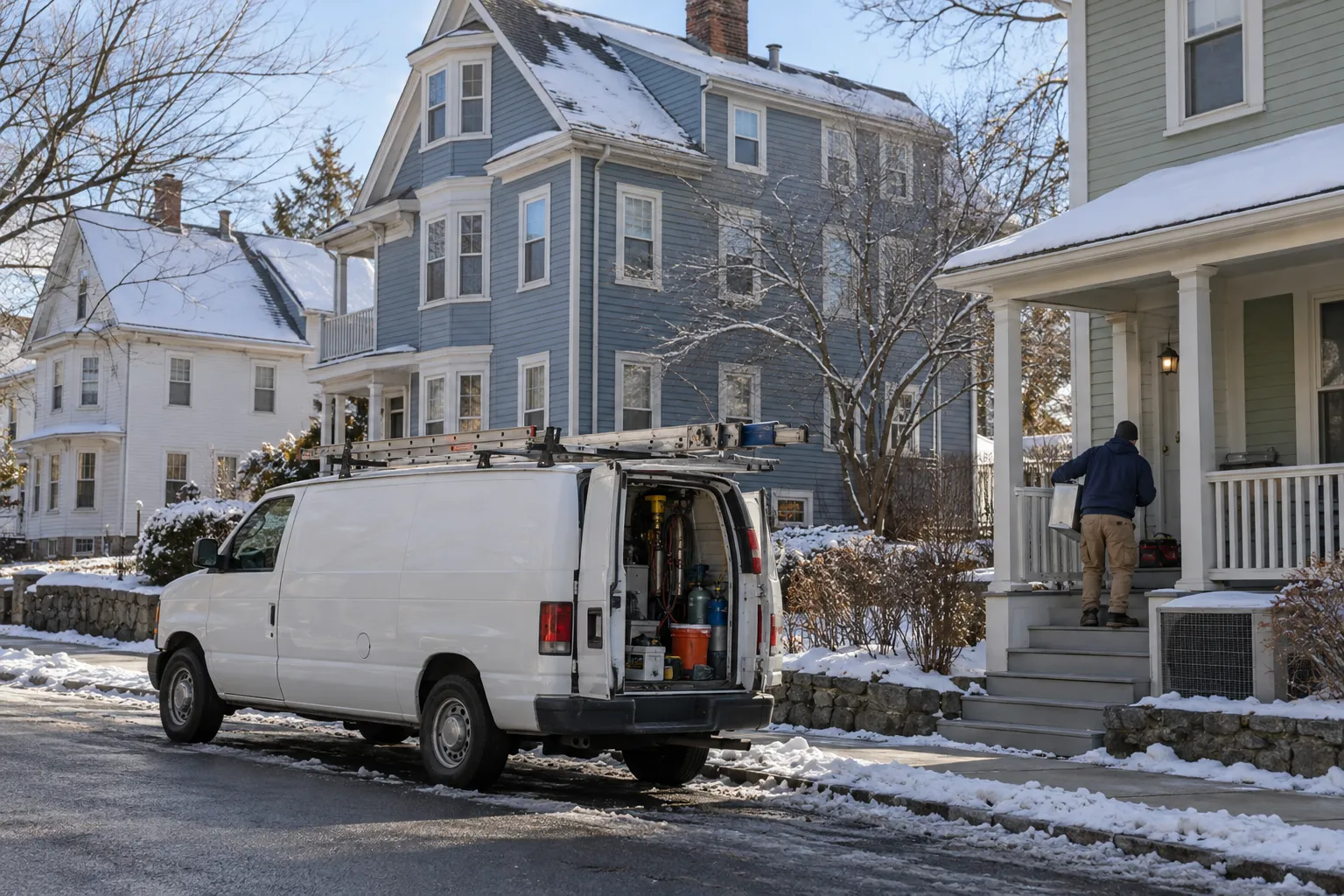
Need ac installation & replacement in Phoenixville?
Tell us what your system is doing. Request a callback to check provider availability, or send a request and a local provider will follow up.
No obligationRequest an estimate for your new AC
A new air conditioner is a big step, and it helps to understand it before you decide. Most systems last about 10 to 15 years. As they age, they cool less evenly, run louder and use more power. A provider can look at the unit, the ducts and the house. Then they can explain whether repair still makes sense or whether replacement is the wiser path.
Italymo Heating & Air is a referral service. It explains how the seasons strain your system, then connects you with an independent local provider in the Phoenixville area. The provider does the work and gives the quote. Cold winters, freeze-thaw cycles and coastal storms all leave marks on outdoor equipment, so planning ahead of the first heat wave gives you time to compare options calmly. There is no obligation to hire anyone.
A hot house in July feels urgent, and it is. If your system has quit, you may be typing emergency AC repair into a search bar. Many times a provider can fix the problem. Sometimes the visit shows the unit is simply worn out.
Think of a kitchen faucet that drips again every few weeks. After a while, new washers stop making sense and the whole faucet needs swapping. Air conditioners reach that point too.
Request a callback to check provider availability and ask whether repair or replacement fits your home.
A system rarely fails without warning. It gives small hints first, much like a car that rattles before it stalls. Watch for these:
One sign alone may not mean much. Several together build a stronger case.
Imagine an older car with a large repair bill. At some point you ask whether that money belongs in a newer car. A common rule of thumb compares the repair price to the cost of a new system. If the unit is past its middle years and the repair is a big share of a new one, replacement often wins. Ask a provider for both options in writing so you can compare them side by side.
Cold, snowy winters leave your outdoor unit idle for months. Freeze-thaw cycles can shift the pad it rests on. Spring snowmelt and coastal storms can leave debris, water and salt on the coil. It is like a bicycle left in the shed all winter: it needs a look before the first long ride.
Provider schedules are often less crowded in spring and fall than during the first heat wave. Planning a replacement then gives you time to compare quotes instead of rushing. That is the idea behind season ahead, not behind.
Picture one big fan in a hallway, then several small fans in separate rooms. Both cool, but in different ways.
Buying a cooling system is like buying shoes. Too big or too small, and it never feels right. An oversized unit cools fast, shuts off, and repeats, which can leave damp air in a full basement. An undersized one runs all day and still struggles.
Ask the provider about a load calculation. It looks at insulation, windows, ceiling height and how the house is built, not just square footage.
Every home differs, but a typical job covers these steps:
An air conditioner works as a pair, like a lock and key. The outdoor unit and indoor coil must be made to work together, or comfort and lifespan suffer.
Your furnace or air handler shares the blower and ducts. Homeowners who search for furnace replacement near me sometimes learn that heating and cooling parts need to match, so a provider may suggest checking both. Ask about this early so nothing surprises you later.
Efficiency ratings work like miles per gallon. A higher SEER2 number means less electricity for the same amount of cooling.
If your cooling season is short, a very high rating may take years to pay back. Where summers are long and hot, it pays back sooner. Ask the provider to explain the tradeoff for your own use, not just the number on the box.
A good HVAC service visit includes questions from you. Bring this list:
Independent providers set their own terms, so ask each one.
A new system is a big choice, and you deserve calm, clear steps. Start by describing what you see and hear. Italymo Heating & Air then connects you with an independent local provider. Italymo Heating & Air does not do the work or set prices.
Request a callback when you are ready to talk about heating and cooling options for your home.
A provider looks at your home, ducts and old unit to decide what size and type fit.
The worn-out outdoor and indoor parts are taken out and hauled away.
Power, drain and thermostat connections are set up for the new system.
The provider runs the system, checks airflow and shows you how it works.
These are typical U.S. ranges. Real prices vary by home, equipment and access, so ask any provider for a written quote that lists what is included before you agree.
| Item | Typical range | Notes |
|---|---|---|
| Central AC replacement | $5,000 – $12,000 | Outdoor unit and indoor coil; size and rating change the price |
| Heat pump system | $6,000 – $14,000 | Cools and heats; ask about cold-weather performance |
| Single-zone ductless mini-split | $3,000 – $7,000 | Useful where there are no ducts |
| Multi-zone ductless system | $6,000 – $15,000 | Price rises with each indoor unit |
| Ductwork repair or sealing | $500 – $3,000 | Needed more often in older homes |
| Electrical or thermostat updates | $150 – $2,000 | Depends on panel, wiring and control type |
Request a callback or send the request form and describe your old unit, your home and your concerns.
You are connected with an independent provider in your area who handles AC replacement.
The provider looks at your home and explains options, sizes and costs in writing.
Pick the option that fits, then agree on a schedule with the provider directly.
Skip the endless searching. Start in one place and get pointed toward a local provider.
Independent HVAC providers in your area do the work and know local weather.
You explain the problem, compare options and decide with no obligation to hire.
Clear, simple explanations help you understand the choices before any work begins.
Tell us what your system is doing. Request a callback to check provider availability, or send a request and a local provider will follow up.
No obligationMany installs take one to two days, but it depends on the system, ductwork and access. Ask the provider for a schedule in writing.
Look at age, repair history and the size of the bill. If the unit is over 12 years old and repairs keep returning, replacement may make more sense. Ask a provider to price both options in writing.
Spring and fall are often calmer for provider schedules, which gives you time to compare quotes. Even so, replacement can happen any time of year when a unit fails.
Tell us what your system is doing. Request a callback to check provider availability, or send a request and a local provider will follow up.
No obligation