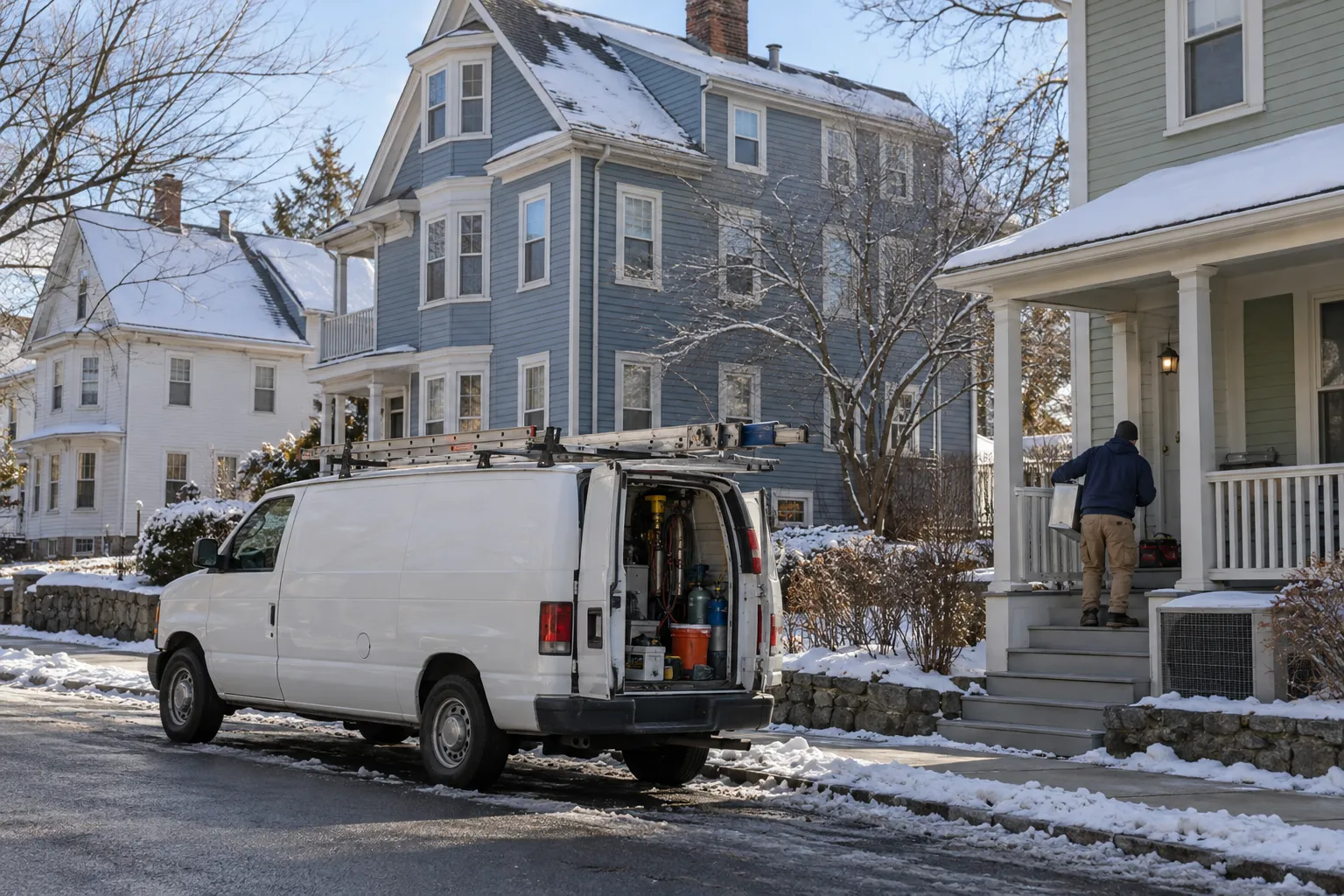
Need ac repair in Phoenixville?
Tell us what your system is doing. Request a callback to check provider availability, or send a request and a local provider will follow up.
No obligationAn air conditioner works like a sponge for heat. It soaks warmth out of your rooms and wrings it out into the yard. When one part gets tired, the whole job slows down, and the house feels sticky long before anything stops completely.
Italymo Heating & Air is a referral service. We do not repair air conditioners. We explain what your system may be doing, then connect you with an independent provider in our network who handles the work. Our aim is simple: fix it small, before a weak spot turns into a breakdown on the hottest week. Cooling needs in the Phoenixville area swing with the seasons, and older homes often add their own quirks. Start with the steps below, then reach out when you are ready to talk with a local provider.
Think of your air conditioner as a long hallway for heat. Warm air walks in, the system pulls the warmth out, and cool air walks back. If something blocks the hallway, the house stays warm. A few quick checks can tell you whether the block is small or serious.
Make sure it is set to cool and the temperature is set below the room reading. Fresh batteries fix more problems than you might expect.
A clogged filter is like breathing through a wet scarf. Airflow drops, and the system strains. Swap in a clean one if yours looks gray and furry.
If the breaker has tripped, reset it once. If it trips again, stop. Also make sure leaves, snow crust, or storm debris are not piled around the outdoor unit.
Your AC may sit idle for many months. Winter in our region is cold and snowy, with thaw swings in spring and coastal storms that rattle outdoor equipment. Then the first hot week arrives and the system must run hard with no warm-up. Like a runner who skipped training, it shows its weak spots right away.
Systems usually give hints before they quit. Catching a hint early often keeps the repair smaller.
Air that feels weak or only slightly cool can point to low refrigerant, a tired compressor, or a dirty coil.
Grinding, squealing, or clicking means a moving part is unhappy. A musty smell can mean moisture. A burning smell is a reason to switch the system off.
Ice on the copper line or indoor coil is a sign that air or refrigerant is not moving as it should. Turn the system off and let it thaw.
A clogged drain line can back up. In a basement or a tight closet, that water can reach floors and walls quietly.
Some situations call for emergency AC repair. Examples include a burning smell, sparking, a unit that keeps tripping the breaker, or heat that is unsafe for young children, older adults, or anyone with a health condition. Turn the system off if you smell burning. Request a callback to check provider availability, since response times vary by provider and by how busy the season is.
A good visit follows a calm order, like a doctor checking symptoms before ordering tests.
In older homes, they may also look at tight mechanical rooms, long duct runs, or window units added over time.
These small electrical parts help the motors start. When they wear out, the unit hums but will not run. They are often a modest fix.
Refrigerant is not used up like fuel. If levels are low, there is a leak somewhere, and a provider should find it rather than just top it off.
A failing fan motor stops heat from leaving the system. A dirty or damaged coil does the same, much like a radiator packed with dust.
Algae and dust can plug the line that carries moisture away. Clearing it protects floors and ceilings.
A helpful rule: if the repair is small and the unit is fairly young, repair usually makes sense. If the system is old, needs repeated fixes, or uses an older refrigerant that is getting harder to source, replacement may deserve a look. Ask the provider to explain both paths in plain words, with written numbers for each.
The calmest time to deal with cooling trouble is before the heat peaks. Spring tune-ups, a clear outdoor unit, and a clean filter make a real difference. After a harsh winter or a coastal storm, a quick look at your equipment can catch damage early. Heating and cooling systems share ducts and controls in many homes, so one check can often cover both.
Bring a short list to the conversation:
A clear provider will welcome these questions. Italymo Heating & Air makes the first step simple, and there is no obligation to hire anyone.
A provider checks airflow, temperature, refrigerant, and electrical parts to find why your system is not cooling well.
Worn capacitors, motors, and contactors can often be replaced without changing the entire system.
Clearing clogged drain lines helps prevent water stains, musty smells, and damage near the indoor unit.
Providers explain the problem and share a written quote, so you can decide on the next step.
Prices vary with the part, the system, and the home. These typical U.S. ranges are only a starting point. Always ask the provider for a written quote that explains the work before you agree to anything.
| Item | Typical range | Notes |
|---|---|---|
| Diagnostic visit | $75 – $200 | Often applied when you hire for the repair |
| Capacitor or contactor | $150 – $450 | Common electrical wear item |
| Drain line clearing | $100 – $350 | Depends on access and clog |
| Fan motor replacement | $400 – $900 | Varies by motor type and model |
| Refrigerant leak repair | $250 – $1,600 | Leak location changes the price |
| Compressor replacement | $1,500 – $3,500 | Often compared with full replacement |
Tell us what you notice, such as warm air, strange noises, or ice, and where your home is located.
Request a callback or send the request form to be connected with a local provider.
The provider reviews the issue and gives you a written quote to look over.
Choose the option that fits and agree on timing directly with the provider.
You hear what is happening and why, in everyday words, before you decide whether to contact a provider.
Skip the endless searching. Reach an independent local provider from a single starting point.
Advice is shaped by cold winters, spring thaw, and storms that affect how your system ages.
You choose whether to hire a provider, and there is no obligation to go ahead.
Tell us what your system is doing. Request a callback to check provider availability, or send a request and a local provider will follow up.
No obligationCommon causes include a dirty filter, a blocked outdoor unit, low refrigerant, or a failing part like a capacitor or fan motor. Check the filter first, then ask a local provider to inspect the system.
It depends on age, repair cost, and how often it breaks. A small repair on a fairly young unit often makes sense. For an older system, ask the provider to compare repair and replacement in writing.
Many providers in our network can respond quickly, but availability varies by provider and season. Request a callback to check who is available, and turn the unit off if you smell burning.
Tell us what your system is doing. Request a callback to check provider availability, or send a request and a local provider will follow up.
No obligation